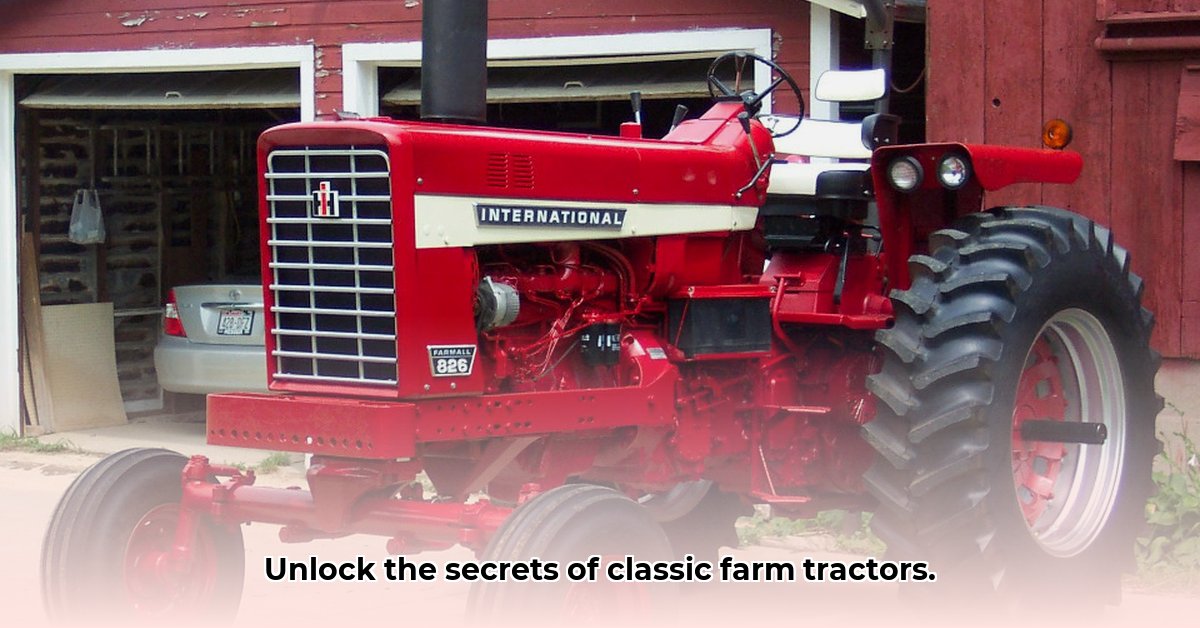
The International Harvester 826: A Legacy of Power and Value
The International Harvester 826, produced primarily during the late 1960s and early 1970s, represents a significant chapter in agricultural history. More than just a machine, the 826 was a reliable workhorse on countless farms, a testament to robust engineering and enduring design. This guide explores the 826's value, how to find a good example, maintenance strategies, and the rewarding process of restoration. Whether you're a seasoned collector or a farmer seeking a dependable tractor, understanding the 826 is crucial to navigating this classic market. For additional resources, check out this helpful website.
Technical Specifications and History: Understanding the 826's Heritage
The International Harvester 826 offered impressive power, ranging from 79 to 102 horsepower, depending on the engine (gasoline or diesel) and configuration (standard or row-crop). Its 37-gallon fuel tank allowed for extended operation. The tractor's relatively low production numbers – estimated around 316 units – contribute to its collector appeal. Finding original documentation adds to the ownership experience, highlighting the machine's unique history. Isn't it fascinating to imagine the hands that once guided this powerful machine across fields? The 826’s robust design reflects a period of agricultural innovation, and understanding its history enhances its value.
| Specification | Details |
|---|---|
| Horsepower | 79-102 hp (depending on model and engine) |
| Fuel Type | Gasoline or Diesel |
| Weight | [Insert Weight – needs data from source] |
| Transmission | [Insert Transmission Details – needs data from source] |
| Key Features | Three-point hitch, [additional features – needs data from source] |
Market Analysis & Value: Assessing the Investment
Determining the value of an 826 is a nuanced process. Condition is the paramount factor. A meticulously restored 826 in excellent condition commands a significantly higher price than one requiring extensive repairs. Hours of operation and the rarity of specific variants (such as Gold Demonstrator models) also influence value. Think of it as appraising a classic car—provenance and condition directly impact the final price. Online marketplaces offer valuable insights into current market trends.
| Condition | Price Range (USD) | Notes |
|---|---|---|
| Excellent | $15,000 - $25,000 | Fully restored or meticulously maintained |
| Good | $10,000 - $15,000 | Minor cosmetic or mechanical imperfections |
| Fair | $5,000 - $10,000 | Needs some repairs and cosmetic work |
| Needs Restoration | $2,000 - $5,000 | Significant mechanical and cosmetic issues |
These price ranges serve as a general guideline. Actual market prices can fluctuate due to location, demand, and the specific features of each tractor. Have you considered the potential for appreciation in value, adding another layer to the investment opportunity?
Buying and Owning an 826: A Comprehensive Buyer's Guide
Purchasing a classic tractor requires careful consideration. A pre-purchase inspection by a qualified mechanic familiar with vintage tractors is highly recommended. This is not a purchase to rush.
Pre-Purchase Inspection Checklist:
- Engine: Check for leaks, unusual noises, and overall condition.
- Transmission: Test all gears; smooth shifting indicates good condition. Grinding is a significant concern.
- Hydraulics: Test the lift and other hydraulic components. Leaks or slow response require attention.
- Physical Condition: Inspect for rust, corrosion, and damage.
- Parts Availability: Research part availability before buying; scarce parts can lead to costly delays.
Restoration and Maintenance: Preserving a Legacy
Maintaining an 826 is essential for preserving its value and ensuring reliable operation. Regular oil changes, filter replacements, and lubrication are critical. Developing a robust maintenance schedule is vital for long-term care.
Restoration is a more involved undertaking. It's a labour of love, demanding expertise, patience, and access to specialized parts. The process may include:
- Thorough Assessment: Document the condition of every component.
- Parts Sourcing: Utilize online resources, specialists, and fellow enthusiasts.
- Mechanical Repair/Overhaul: Engine and transmission work often necessitates professional expertise.
- Cosmetic Restoration: Paint, decals, and other cosmetic details complete the process.
Conclusion: Weighing the Investment
The International Harvester 826 offers a unique blend of historical significance and potential appreciation. It also demands a commitment to maintenance and the potential for substantial repair costs. Carefully consider the pros and cons before making a purchase to determine if this classic tractor is the right addition to your collection or farm. Is the rewarding challenge of restoration and ownership worth the effort? The answer is personal, but armed with this knowledge, you're equipped to make an informed decision.